 MayoEaster EggerDate Joined: May 2024
Welcome to Backyard Chicken Cam
Backyard Chicken Cam came to be during the COVID lock down. Remote work and staying at home lead to a lot of boredom and free time.
We do our best to keep the cam going 24/7. Feel free to drop in any time of day to see whats new, or hang out with the flock.
The Flock
MayoEaster EggerDate Joined: May 2024 DoveFrost White LegbarDate Joined: April 2025
 Pontiff de PolloCream LegbarDate Joined: April 2025
 Gandalf the GreyLavender AmeraucanaDate Joined: April 2025
 Georgia WashingtonWhite Crested Black PolishDate Joined: April 2025
 Spider (Jumping)Egyptian FayoumiDate Joined: April 2025
 Ping PingBlack SumatraDate Joined: April 2025
 Fluttershy
Olive Egger
Date Joined: April 2025
Fluttershy
Olive Egger
Date Joined: April 2025
 Birb 2.0
Black Copper Maran
Date Joined: April 2026
Birb 2.0
Black Copper Maran
Date Joined: April 2026
Roxie
White Leghorn Mix
Date Joined: May 2026
 Mischief
Sapphire Gem
Date Joined: May 2026
Mischief
Sapphire Gem
Date Joined: May 2026
Snowstorm
Dominique
Date Joined: August 2026
Named after livestreamer @SnowStorm_GT. Thanks for watching!
Our Rooster: Floofy McFloofyPants
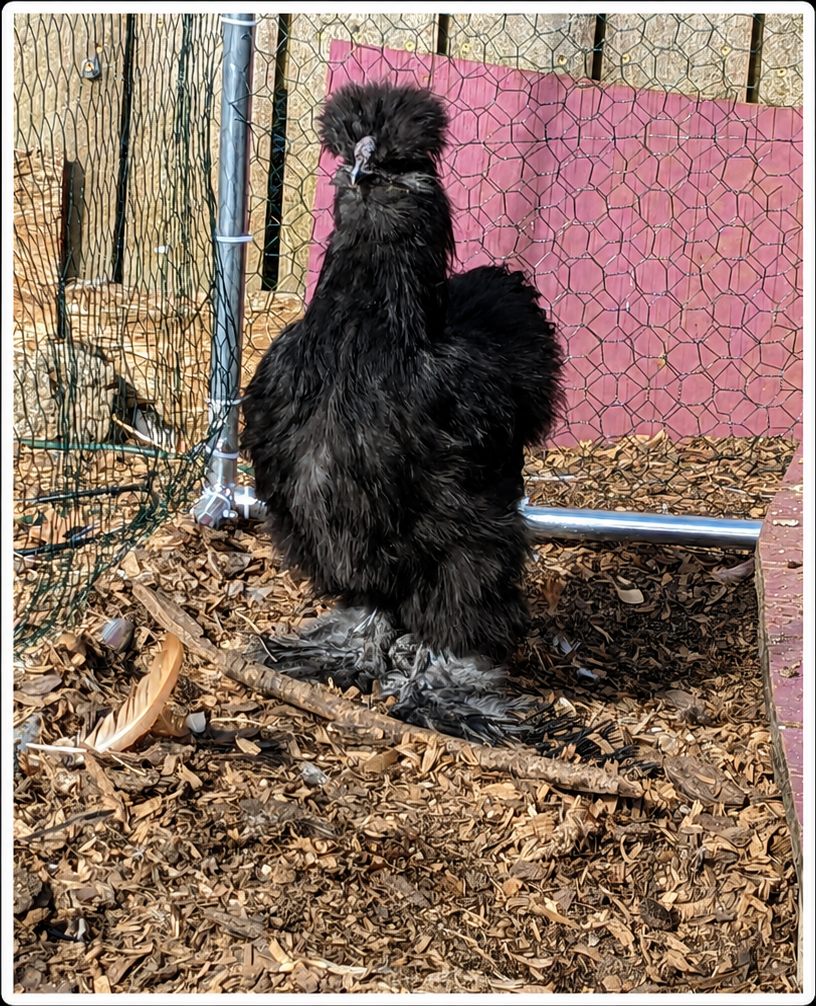
Floofy McFloofyPants is our Black Silkie rooster. Silkies are a Chinese breed named for their unusually fluffy plumage, which feels soft like silk or fur.
Silkies are known for several unique traits, including black skin and bones, blue earlobes, and their gentle personalities. If you watch closely when treats are thrown out, you may see and hear Floofy tidbitting for the hens.
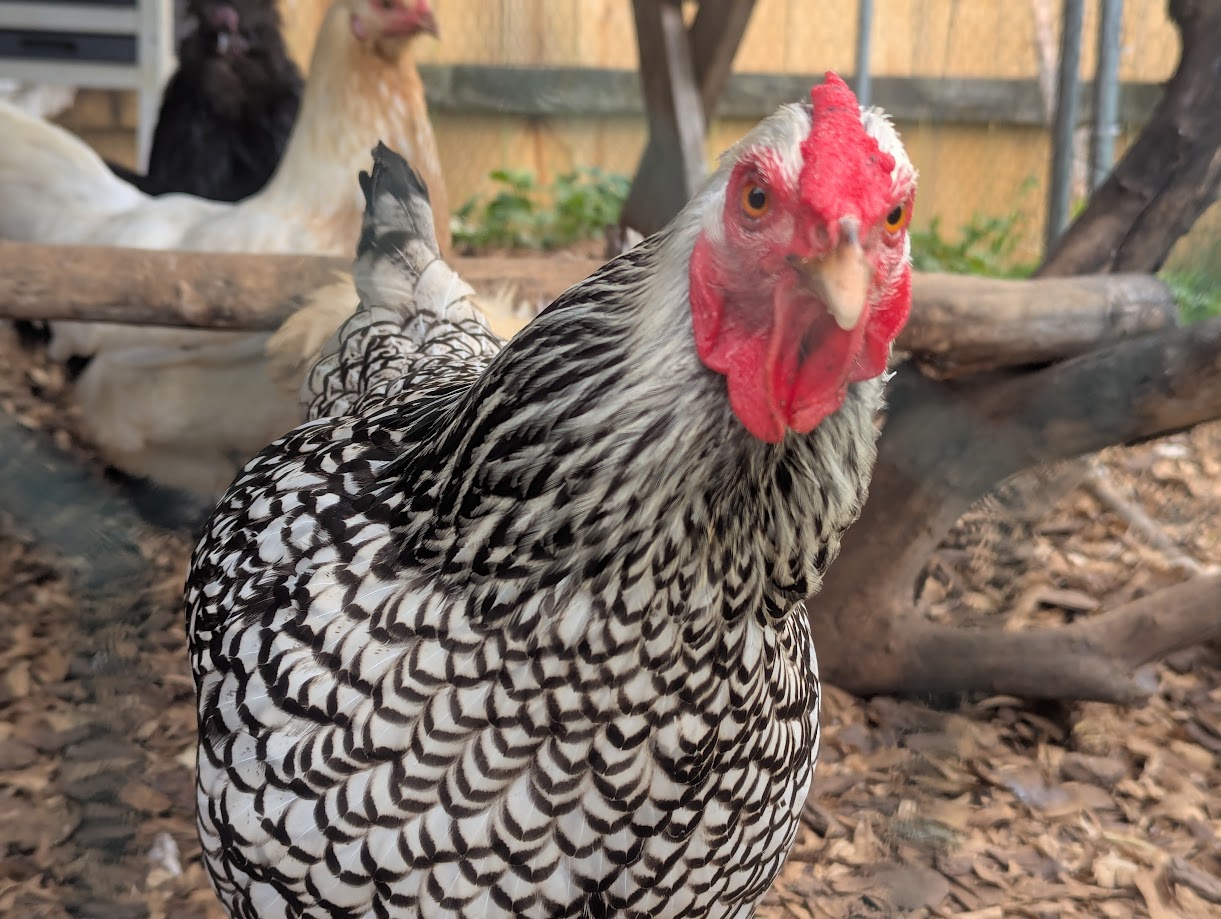
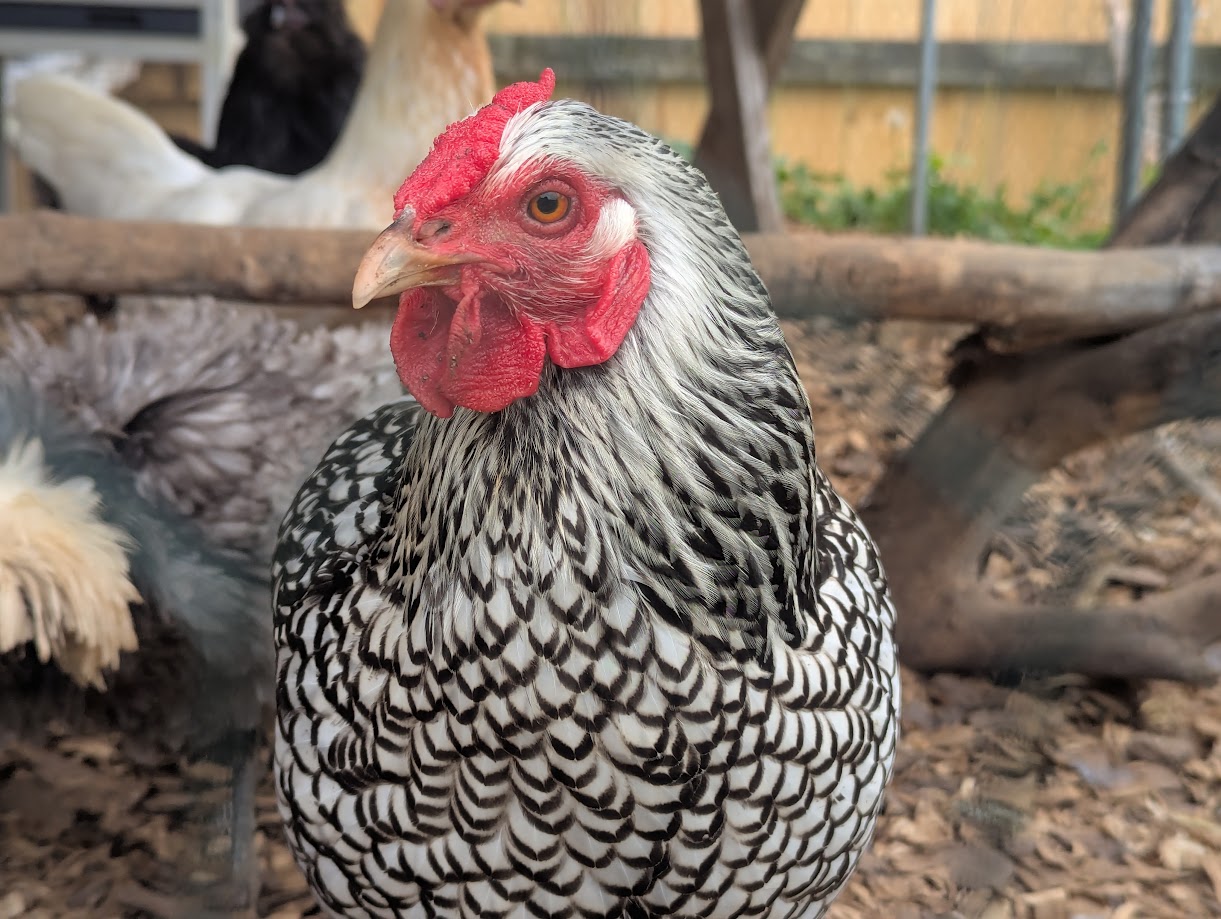
The Matriarch: Lego
Lego is a Silver Laced Wyandotte and the oldest surviving hen in our flock. She joined us as a baby chick in 2018 and has firmly established herself as the matriarch of the coop.
About Chickens
The chicken is a domesticated subspecies of the red junglefowl, originally native to Southeast Asia. Chickens were first domesticated around 8,000 years ago and are now one of the most common and widespread domesticated animals in the world.
Chickens are primarily kept for their meat and eggs, though many—like ours—are also kept as pets. As of 2023, the global chicken population exceeded 26.5 billion, with more than 50 billion birds produced annually for consumption.
A hen bred for laying can produce over 300 eggs per year. Chickens are social animals with complex vocalizations and behaviors, and they appear in folklore, religion, and literature across cultures. Their economic importance makes them a central part of global animal husbandry.
Chickens are omnivores. In the wild, they scratch at the soil in search of seeds, insects, and even small animals like lizards, snakes, and mice. Depending on the breed, a chicken may live 5–10 years; the oldest known chicken lived to be 16.
Chickens live in flocks and establish a social hierarchy known as the pecking order. Dominant birds receive priority access to food and nesting sites. Despite often being viewed solely as food animals, chickens demonstrate cognition, emotions, and social behavior comparable to many birds and mammals.
Facts About Roosters
Roosters are male chickens known for protecting their flock, maintaining social order, and crowing to alert others of potential danger. They typically have brighter plumage, larger combs and wattles, and spurs.
Roosters play a vital role in fertilizing eggs and often put their hens first by "tidbitting"—finding and offering food to hens before eating themselves. They also possess remarkable facial recognition abilities for both humans and other chickens.